
Scale-Up Success Story
KEMARO
From Salary Questions to a Scalable PAY SYSTEM:
How KEMARO Structured Compensation During Growth
© KEMARO AG
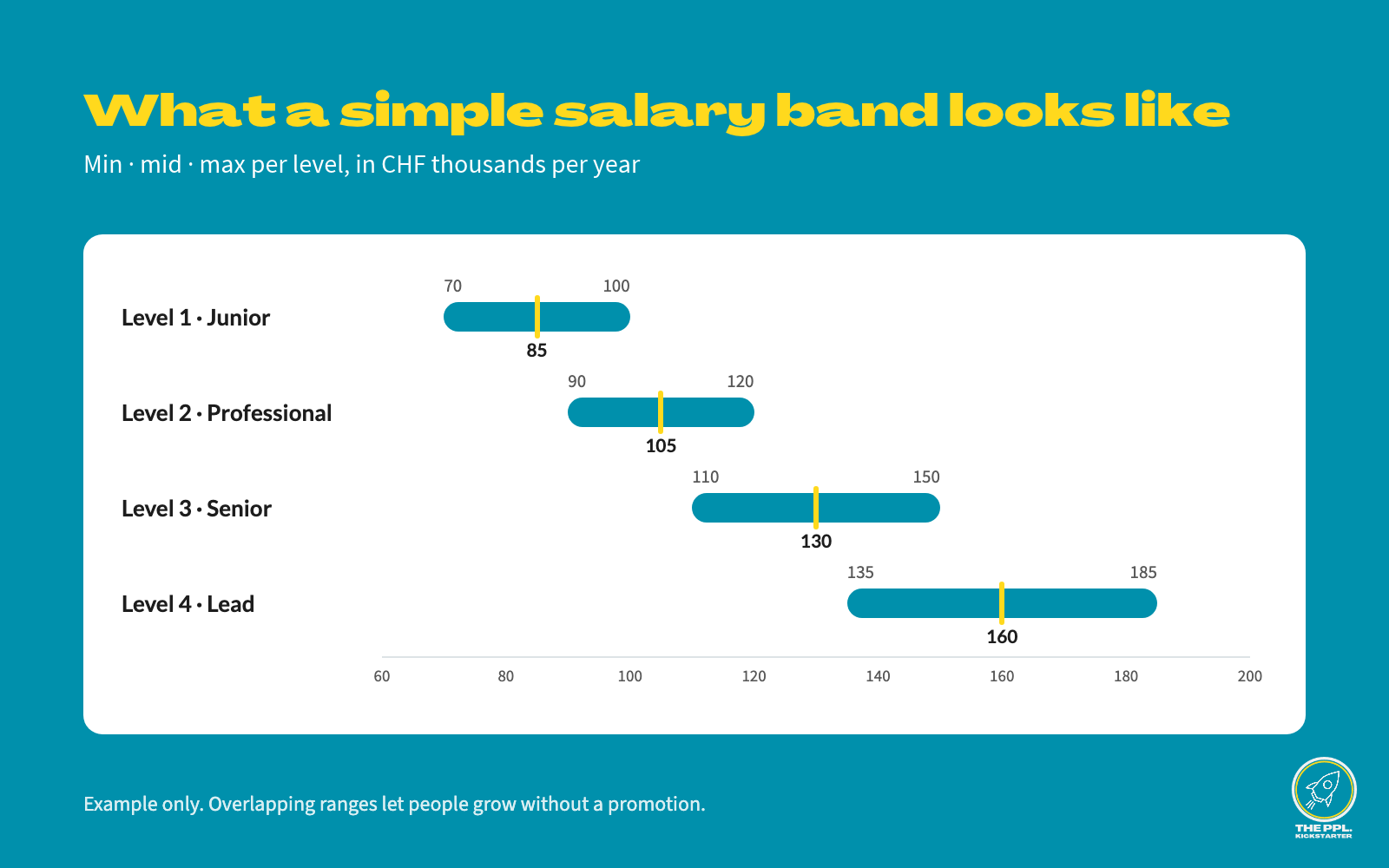
3. Market benchmarking and salary mapping
External salary benchmarks were incorporated using Swiss and International market data and the compensation benchmarking platform Ravio.
Once salary bands were defined, existing salaries were mapped against the framework to identify:
salaries positioned below or above the intended band range
internal inconsistencies
cases requiring adjustment during rollout
This step helped leadership move from historical salary decisions to a consistent, market-informed structure.
5. Strategic rollout
The introduction of the compensation system was intentionally aligned with the company’s annual performance review cycle, ensuring salary adjustments could be implemented within an existing communication and decision-making flow.
During rollout, several team members whose salaries were positioned significantly below or above the new band ranges were adjusted to align with the new framework.
Managers were equipped with clear communication guidance to ensure salary conversations were consistent across teams.
2. Role leveling framework
Together with the full leadership team, a role leveling framework was developed to define how roles differ in scope, complexity, and expected contribution.
The framework covers both:
Individual Contributor roles
Management roles
and includes clear leveling criteria that allow the structure to expand as the organization grows.
Rather than relying solely on job titles, the framework defines how responsibilities and impact evolve across contribution levels (e.g., Junior, Mid, Senior).
This structure forms the backbone of the salary band system.
4. Implementation and leadership enablement
To ensure consistent application of the new system, several practical implementation tools were developed.
These included:
High-level goals and compensation model guideposts
A salary review and adjustment process
A compensation rollout checklist
A managers’ guide for compensation conversations
A dedicated Business Hour answering leadership questions
The manager guide provided structured talking points and guidance for navigating salary discussions transparently and constructively.
6. Global scalability
The compensation system was initially implemented in Switzerland and later extended to KEMARO’s international locations.
Because the model was built on clear principles and simple structures, the internal team was able to integrate the system into existing internal data and spreadsheet systems.
Supported by the CFO’s strong analytical capabilities, the company can apply the same compensation logic globally while maintaining flexibility for local market realities.
“What I appreciated most was that we didn’t just get a compensation model. We built a KEMARO-culture-aligned system our leadership team can actually run and scale internally. It brought alignment, transparency, and structure exactly when we needed it as the company continued to grow.”
Installing a scalable compensation system for a growing robotics company
Client Snapshot
Company: KEMARO AG
Industry: Robotics / Industrial Automation
Team Size today: 60+ employees and growing
Team Setup: Switzerland HQ with international presence
Context: Organizational development during the Innosuisse scaleup coaching phase
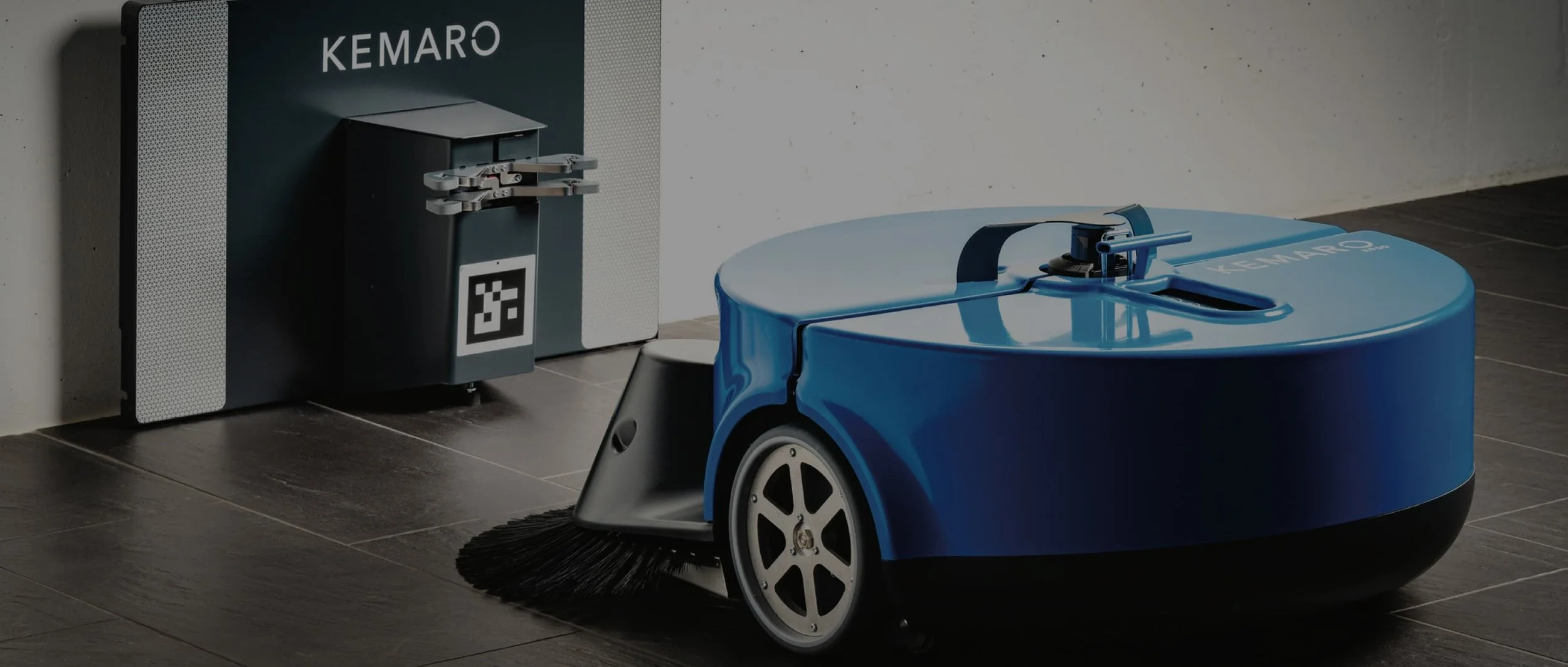
KEMARO develops autonomous cleaning robots used in industrial environments. As the company approached its 10-year anniversary in 2026, the team had grown to more than 50 employees and continued to expand internationally.
The project began during the company’s Innosuisse scaleup coaching phase, where leadership was reviewing internal structures to support continued growth.
Shortly after the collaboration began, KEMARO reached the maximum duration for startup coaching within the Innosuisse program. The work therefore continued directly with the company to complete the compensation system design and rollout.
The Challenge
As the company scaled, compensation decisions had evolved gradually over time without a systemic approach or consistent compensation model in place.
While operational HR basics such as employment contracts, employee appraisals were standardized, there was no shared framework for setting and developing salaries across roles and levels.
Leadership began noticing typical scaling friction that created a growing risk of losing talent, budget unpredictability, and scattered HR guidelines risking team friction overall:
People increasingly asked how salaries were determined
Significant salary differences appeared within some similar roles
Salary decisions risked becoming more and more case-by-case negotiations
At the same time, KEMARO wanted to strengthen its employer attractiveness and create a clear foundation for upcoming annual performance conversations.
The goal was therefore not simply to adjust and systemize salaries, but to install a clear compensation system that leadership could apply consistently as the company grows.
“The compensation framework Carolin helped us build gave our leadership team a clear and consistent way to approach salary decisions. It brought alignment, transparency, and structure exactly when we needed it as the company continued to grow.”
The Approach
The objective was to design a practical compensation system that leadership could understand, apply, and scale, and that would be fair and transparent for the teams.
Rather than introducing a complex HR structure, the focus was on building a clear and easy decision logic behind compensation and enabling the internal middle management team to maintain and evolve the system independently.
1. Compensation system design
The collaboration began with defining the principles guiding compensation decisions.
These discussions translated into a high-level compensation framework covering:
How the company positions itself relative to the market
How salary bands are structured
How pay decisions align with company growth and culture
These guideposts became the decision logic behind the compensation model, ensuring salary discussions are based on shared principles rather than individual negotiation.
The Outcome
KEMARO now operates with a structured and explainable compensation system.
Leadership gained a clear foundation for salary decisions, making compensation discussions significantly easier and more consistent across the organization. The need to check in with leadership or HR was significantly reduced afterwards, as middle management could then confidently take on more of these discussions on their own.
The system enabled the company to:
Align compensation with the company’s recently re-shaped cultural values
Identify and correct internal salary inconsistencies
Introduce transparent salary bands aligned with the market
Equip managers to communicate compensation decisions confidently
Apply the same compensation logic across global locations
The increased clarity around compensation was broadly appreciated across the team.
“A framework that gives everyone at KEMARO clarity and transparency for further growth.”
Do you want to learn how to get a clear, scalable compensation system like KEMARO?