
Hi, I’m Carolin.
I help scaling tech companies get the People layer right.
20+ years across HR, org development, compensation, M&A, and culture.
Founder of The ppl.Kickstarter, and building ppl.intelligence: AI portfolio diagnostics on the People layer for VCs and accelerators.


You’re not bad at managing people. You just never got the systems.
Most founders ask themselves some version of these questions at some point.
These aren’t signs you’re doing it wrong. They’re signs you’ve hit the stage where the informal stuff stops working. Not corporate HR. Not a 200-page handbook. Just the systems that make your team work without you holding it all together.
That’s what I help with.
▶︎ When should I hire my first HR person?
▶︎ Should I go fractional or full-time?
▶︎ What People processes do I actually need before Series A?
▶︎ How do I handle a performance issue without a proper HR process?
▶︎ How do I keep the culture intact when we’re hiring 10 people in three months?
▶︎ And how do I stop being the one who has to make every people decision?
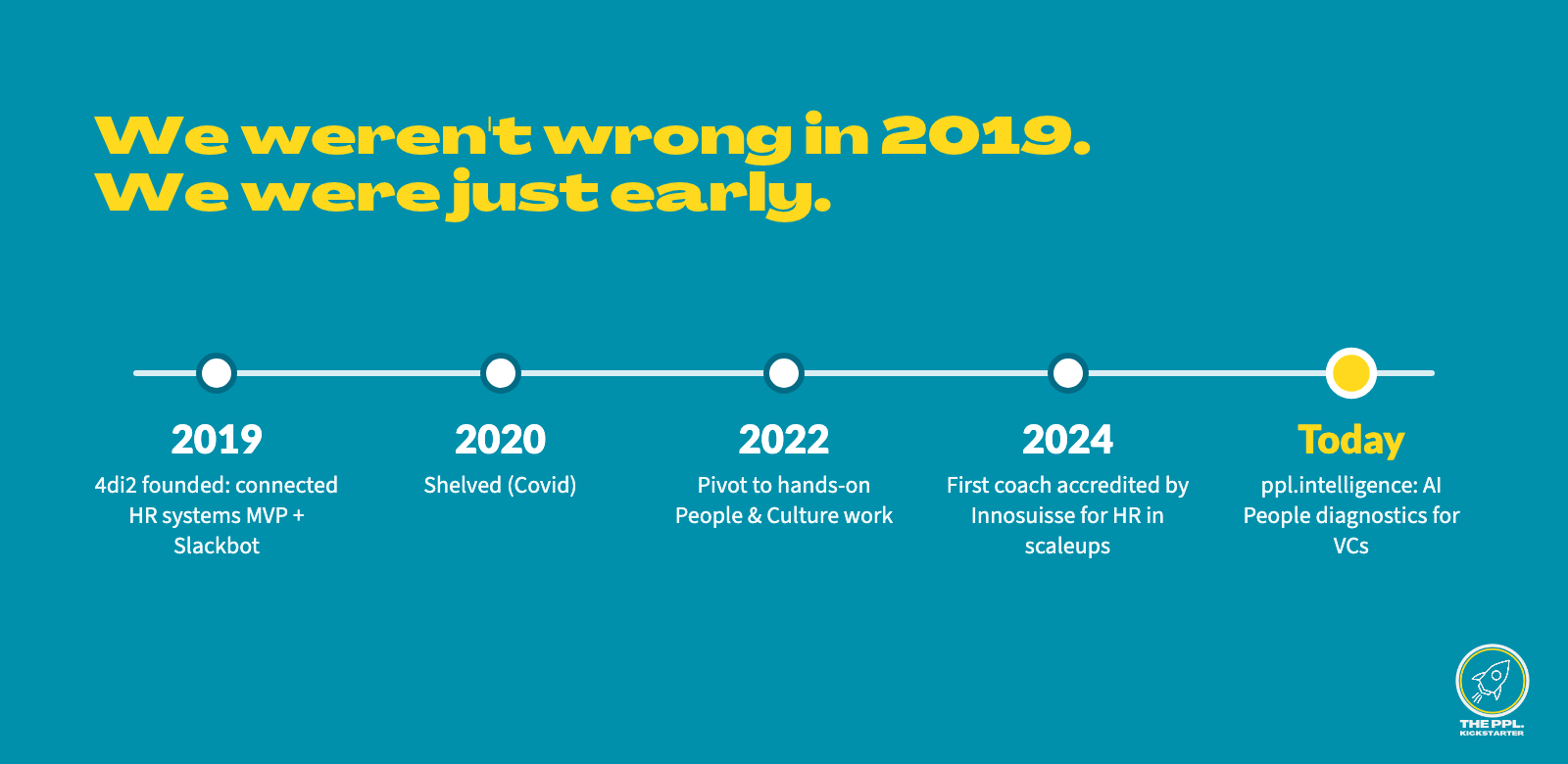
We weren’t wrong in 2019. We were just early.
In 2019, I named my company 4di2 after a vision: HR systems needed to be connected. We built the MVP, a single-gateway HR app plus a Slackbot pulling from a connected database. It was pre-AI, so answers were structured lookups, not natural language. A researcher told us it was “way too complicated with APIs at that scale.” Then Covid hit, and we shelved it.
In late 2022, I pivoted 4di2 into hands-on People & Culture work with Swiss scaling tech startups. Same goal, different tools.
And I kept seeing the same pattern: smart founders building great products while their teams quietly broke on the People layer. How decisions got made. How feedback happened. How pay conversations landed. Not because the founders didn’t care, but because nobody gave them the systems, and nobody was measuring it.
Now the tools have caught up. So I’m building it again, more focused this time: ppl.intelligence, portfolio-level People diagnostics for VCs and accelerators. And through The ppl.Kickstarter, I keep working hands-on with founders, because that’s where the pattern recognition comes from.
-
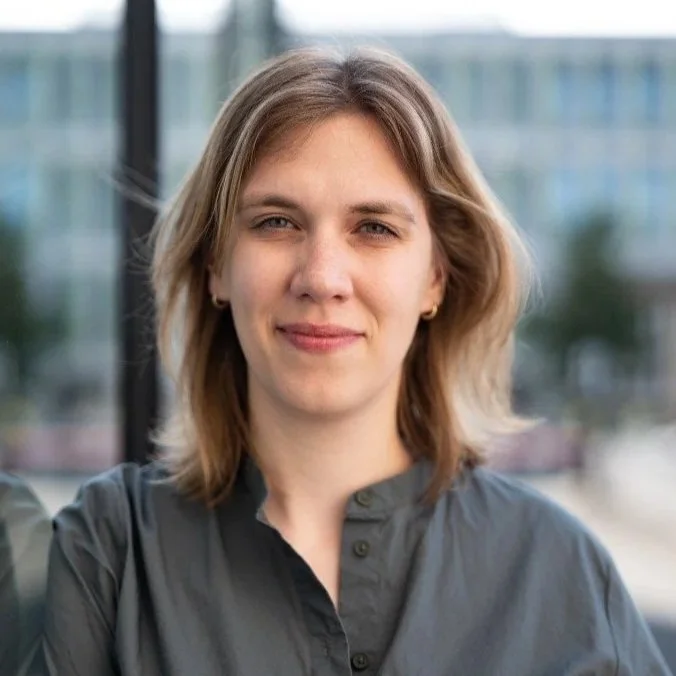
"We now have a long-term, sustainable model that guides hiring decisions and internal discussions about pay and career levels."
Maria Ufnal, HR Generalist @Exnaton
-
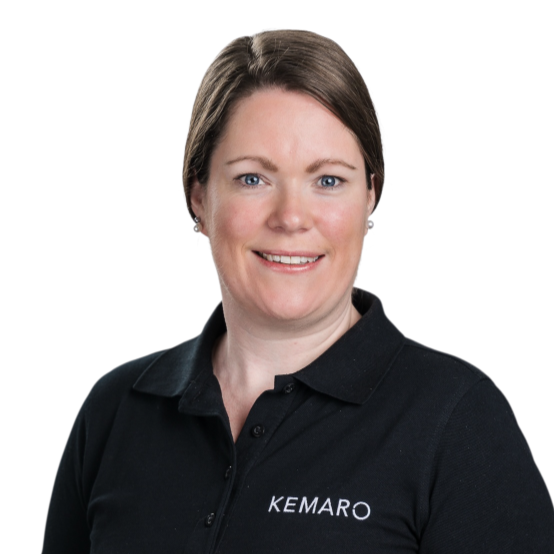
"We realised we were already acting on our values. We just hadn't seen the link."
Nadja Gerber, CFO @KEMARO
-

"Clarity and structure matter, even in a startup: in processes, communication and needs."
Emmanuel Bauer, Founder & CEO @House of Charts
-

"Feeling confident in these HR topics was priceless in getting our office off to a successful start."
Gisela Schmoger, SVP Legal & HR @AUGENTIC
How I work.
Data first, hands-on where it matters. Direct, practical, low on jargon. No 200-slide decks, no generic frameworks.
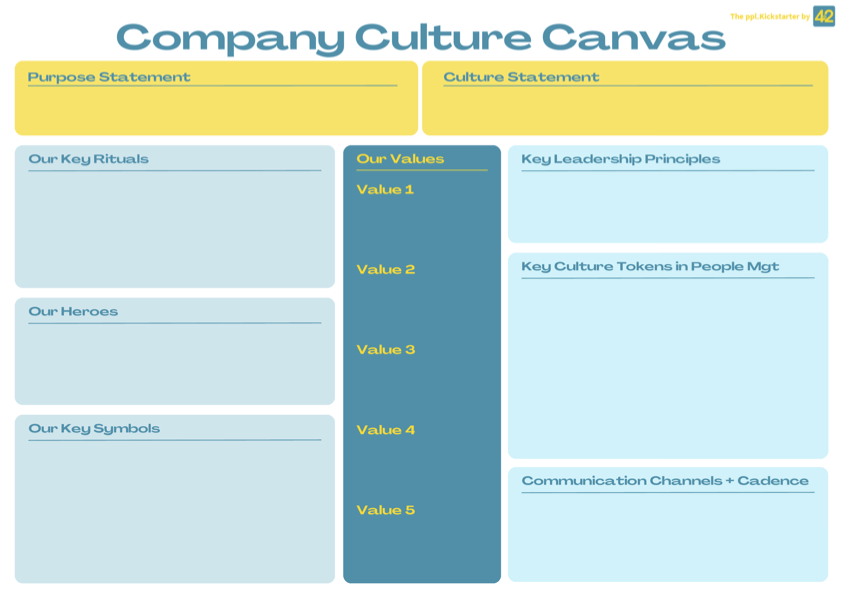
My approach draws on 20+ years of hands-on experience, Hofstede’s cultural dimensions, the Culture Onion, practical behavioural science, and my own Culture Canvas methodology, built to help founders define and live company culture without corporate overhead.
The questions I hear most from founders: How do I stop being the bottleneck for every people decision? What do I need in place before Series A? When’s the right time for a first HR hire, and do we need a fractional Head of People in the meantime? How do I build pay bands that are fair and sustainable? How do I keep the culture alive when we’re hiring fast?
My goal is always to build systems that run without me. I’m not here to create dependency. I’m here to give you systems that work when I’m not in the room.
The compensation questions I get from founders most.
Compensation is one of the most avoided conversations in early-stage startups, and one of the most expensive to get wrong. Here’s what I work through with founders regularly:
How do I build salary bands for a 20-person startup without a comp team? What’s a fair pay model when we can’t match big-company salaries? How do I fix pay inequities we created by negotiating every hire individually? Do I need a pay philosophy, and what actually goes in it? How do I explain pay decisions to my team without it backfiring? Salary vs equity: how do I decide per hire? And when should we introduce a formal compensation model at all?
If you have employees in the EU, or hire from there, the EU pay transparency directive matters to you too, including salary ranges in job ads. Swiss companies aren’t directly bound by it, but it’s quickly becoming the expectation candidates bring with them. Getting ahead of this now is much easier than retrofitting it later.
If any of these feel urgent, let’s talk.
Ways to work with me.
For VCs & Accelerators
Portfolio-level visibility on People risk with ppl.intelligence. Start with a pilot.
For Founders
1:1 advisory, culture workshops, comp design, and role clarity through The ppl.Kickstarter.
From CHF 3’500: Work with me directly
Module-based advisory: hiring, compensation, culture, onboarding, performance, leadership, or org structure. Book a call and we’ll figure out where to start.
Speaking & expert input
Accelerator events, keynotes, founder education programmes, expert pools.
CHF 1’500: Full Diagnostic + Coaching Plan
One-time deep dive across 5 dimensions. You leave with a prioritised, actionable plan. No retainer required.
What People processes do I need before Series A?
One of the most common questions I get, and investors are increasingly asking founders about it too. Here’s the short version:
A documented compensation structure (even a simple one)
A hiring process that isn’t just “the founder interviews everyone”
A clear onboarding journey for the first 90 days
Basic role clarity across the team
A way to handle performance that doesn’t need legal advice every time
You don’t need perfection. You need evidence that you’ve thought about it and built something intentional.
Start with a clear picture. Then fix it together.
The Chaos Check or the full diagnostic shows you where your team is at risk. From there, I work with you directly: 1:1 advisory, culture workshops, comp design, and role clarity.
Same pattern recognition I’ve built across 75+ startups, applied to your team.
And for anything beyond People & Culture, I connect you with vetted specialists from my partner network in legal, finance, recruiting, and tech, for example:


Some receipts.
20+
Diagnostics
30+ Teams coached
75+
Startups supported
20+
Years
20+ ppl.intelligence diagnostics, each with a custom action plan per company
30+ teams coached hands-on, 75+ startups supported across mentoring, coaching, speaking, 1:1 and group formats
First coach accredited by Innosuisse (2024) for HR in the scaleup context, a category I helped define
LP and angel investor in early-stage tech, so I see portfolio reporting from the investor side too
Mentor at Founder Institute across multiple semesters
Business help desk expert at Impact Hub Zurich
20+ years across HR, org development, compensation, M&A, and cultural work
As of 2026





Questions I get from founders
-
Most startups don’t need a dedicated People hire until 30–50 employees, depending on hiring pace. Before that, putting the core systems in place and owning them yourselves gives you more for every CHF, and makes your first People hire far more effective when it comes.
-
A fractional Head of People works in your company a few days a month, on an ongoing basis. I work project-based: I build the systems with you and hand them over, so you and your managers run them yourselves. No ongoing dependency.
-
Translate each value into 2–3 concrete behaviours, build them into hiring and feedback, and give them rituals. Values on a wall change nothing; values in decisions change everything.
-
Systematise what made your culture good before you scale it: values that translate into behaviour, onboarding that transmits culture deliberately, and managers who know what good looks like.
-
Clear decision rights, simple processes your managers can own, and templates so nobody has to reinvent the wheel. It’s usually the first thing we fix.
-
Yes. Zurich-based, working with startups across Europe and internationally.
-
Take the Chaos Check. Five minutes, immediate results, and it tells you what to focus on first.
Curious about either?
Book a 30-minute call or DM me on LinkedIn. No prep needed, just tell me what you’re working on: